Home › Industrial and Heavy-Duty Asphalt Paving
Our industrial asphalt paving in Henderson, NV is engineered for heavy trucks, forklifts, and constant traffic. We design thick asphalt sections with strong base support for truck yards, loading docks, and warehouse aprons so your pavement stands up to demanding use.
Precision Asphalt Henderson provides professional industrial asphalt paving throughout Henderson, NV, Nevada and the surrounding area. Our licensed, insured crew delivers safe, clean, on-time work with a free estimate before anything begins. Call (702) 707-5043 or request your free quote.
Industrial Asphalt Paving Built for Henderson’s Real Conditions
Industrial and heavy-duty asphalt paving in Henderson is very different from paving a driveway or a small parking lot. At Precision Asphalt Henderson, we design pavements that stand up to triple-axle trucks, forklifts, fuel deliveries, and constant sun exposure from the Mojave climate. A good industrial pavement is a structural system, not just a black surface.
We start by looking at how your site is actually used. For a Henderson warehouse near the I-515, we may need deep structural sections for truck docks and turning areas, but a lighter build-up for employee parking. For a plant in the Sloan or Henderson industrial areas, we evaluate heavy wheel paths where trucks queue, the frequency of trash truck pickups, and any chemical exposure from operations. This usage analysis guides the thickness, mix type, and reinforcement details so you do not end up overpaying in low-load areas or suffering failures where loads are highest.
The desert environment in Clark County is brutal on pavements. High summer surface temperatures, large day-night temperature swings, and the occasional intense storm all affect the design. We choose PG-graded binders suited to Nevada DOT standards and adjust mix designs to reduce rutting risk and thermal cracking, so your surface does not shove under truck tires or fracture early in its life.
How We Engineer Heavy-Duty Pavements for Nevada Loads
Precision Asphalt Henderson uses a structured engineering approach for industrial asphalt paving rather than a one-size-fits-all thickness. We start with a site visit and a load analysis. We calculate equivalent single axle loads for your specific truck traffic, including delivery semis, container trucks, and yard equipment. We then determine pavement layer thicknesses so the asphalt and base are strong enough through the full design life.
For many Henderson industrial sites, a typical section might include 6 to 12 inches of imported aggregate base over compacted native soil, topped by 3 to 6 inches of industrial asphalt in multiple lifts. High-stress dock aprons and trash enclosure approaches may receive thicker asphalt, higher-modulus mixes, or even concrete pads tied into the asphalt. We design transitions between different pavement strengths so there are no weak seams where cracking can start.
We also factor in drainage and subgrade behavior. In parts of Henderson with clay-rich soils or older graded lots, trapped moisture under a heavy-duty pavement can cause pumping and base failure. We address this with over-excavation, moisture conditioning of subgrade, geogrid reinforcement where needed, and precise slopes to keep water off and out of your pavement structure.
Step-by-Step: Our Industrial Asphalt Paving Process
Every heavy-duty asphalt project we build in Henderson follows a disciplined sequence so trafficking can begin on schedule and the pavement achieves full strength.
1. Site evaluation and coring: On existing plants, warehouses, or distribution centers, we take asphalt cores and test the base. This tells us whether we can overlay or need full-depth reconstruction. We map existing failures like rutting, alligator cracking, and soft spots so the new design resolves the root causes.
2. Excavation and subgrade preparation: We remove unsuitable material and proof-roll the subgrade with loaded equipment. Any pumping or deflection is corrected before we build up layers. Subgrade is compacted to specified density using rollers suited to local soil conditions.
3. Aggregate base installation: We import and place graded aggregate base, then perform layered compaction with vibratory rollers. We check density with field tests so the base will not settle under heavy wheel loads. Thickness is checked with spot measurements and stringline to maintain designed elevations and slopes.
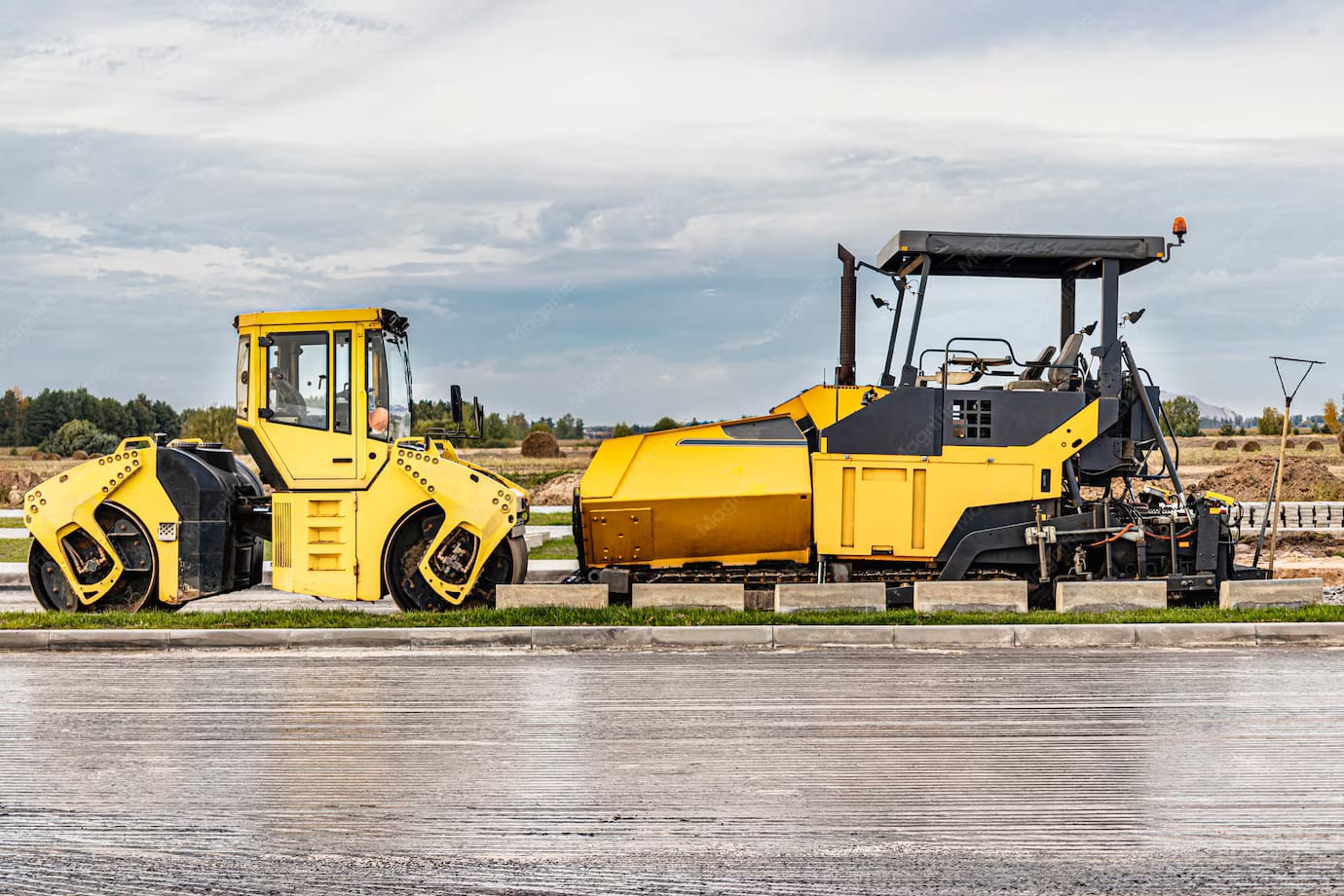
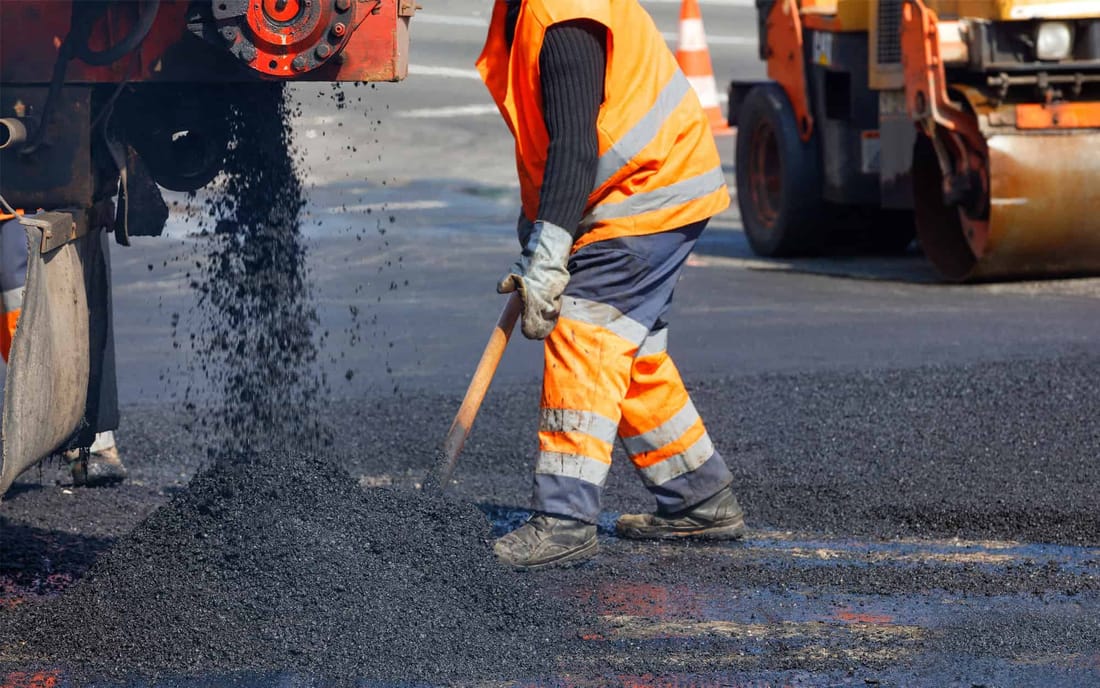
4. Asphalt placement in lifts: Instead of a single thick layer, we place industrial asphalt in multiple lifts. Pavers with automatic grade and slope controls are used for smoothness. Joints are staggered and treated to limit future cracking. We monitor temperatures so mixes do not cool too quickly in the dry Henderson air.
5. Compaction and finishing: Steel and pneumatic rollers compact each lift to achieve air void targets that limit rutting and moisture intrusion. In critical loading zones like loading docks and fueling lanes, we often specify tighter compaction tolerances. Final striping and traffic control markings are installed only after the surface is ready to receive them.
6. Turnover, cure, and staging: We phase work so your plant or facility can keep operating. Truck dock areas may be paved on weekends or nights, with clear staging plans for deliveries. We provide specific cure and opening times for heavy vehicles based on mix type and ambient temperatures.
Material and Design Options for Heavy-Duty Use
Industrial asphalt paving is not a single product. Precision Asphalt Henderson offers a range of material and design options so the pavement matches both your loads and your budget.
For high-load, slow-speed areas like container yards or truck staging lanes in Henderson, we may recommend mixes with higher stone content and stiffer binders to resist rutting. For areas exposed to fuels or oils, such as fleet fueling zones, we can combine industrial asphalt with reinforced concrete pads in the most vulnerable spots to prevent softening and surface breakdown.
Some facilities prefer textured or high-traction surfaces in forklift zones and on slopes. We can adjust mix gradation and finishing methods to increase skid resistance. Where extreme heat is a concern, especially in large unshaded yards, we can use binder modifiers and mix designs that maintain stiffness at high temperatures to limit deformation.
If you anticipate future expansion, we can design pavements that are easier to tie into later, with planned construction joints, load transfer details, and base elevations that allow future thickening without cutting into utilities or redoing drainage.
Cost Drivers and How to Control Your Budget
Heavy-duty asphalt paving is a significant investment, but the right design saves money over time. The main cost drivers in Henderson are pavement thickness, base work, access and phasing constraints, and any remediation of weak subgrade soils.
Thicker sections and higher-performance mixes clearly cost more per square foot, but selective reinforcement often brings the best value. Precision Asphalt Henderson commonly designs projects where truck lanes, docks, and dumpster pads receive heavy-duty sections, while staff parking or lightly used edges receive lighter sections. This targeted approach reduces total tonnage and labor while still protecting critical areas.
Existing site conditions can also increase or reduce cost. If your Henderson facility has been repaved multiple times without addressing base issues, mill-and-overlay might be false economy. Curb reveal, drainage slopes, and existing elevations will limit how much new asphalt can be added. In some cases, full-depth reclamation or reconstruction is more cost-effective over the life of the facility, especially where ponding and base failures are already common.
We help you plan project phasing and access routes so trucks and operations are disrupted as little as possible. Efficient phasing reduces idle time for crews and equipment, which directly reduces your bill. Early planning meetings with your operations managers often uncover simple schedule changes that let us work more efficiently and keep your cost down.
Common Industrial Pavement Problems in Henderson and How We Prevent Them
Facilities in Henderson see a consistent set of pavement failures, especially where heavy trucks and heat combine. Precision Asphalt Henderson designs specifically to avoid the issues we see over and over in local plants, warehouses, and distribution hubs.
One of the biggest problems is rutting in truck paths. This shows up as depressed wheel tracks and raised humps between them. It is usually the result of under-designed thickness, weak base, or mixes that are too soft for local temperatures. We prevent rutting with adequate structural design, proper base compaction, and use of rut-resistant mixes that maintain stiffness under summer heat.
Another common failure is alligator cracking and localized potholes near loading dock aprons, gates, and dumpster enclosures. These spots receive intense repetitive loads and sometimes suffer from poor drainage. In these areas, we often increase asphalt thickness, upgrade base materials, install concrete pads, or add reinforcement at the surface. We also correct grade to eliminate standing water, which accelerates cracking in the desert freeze-thaw cycles that do occur in winter nights.
Reflective cracking from old pavements is also a risk when industrial sites have been overlaid multiple times. If the underlying pavement has extensive cracking, simply adding asphalt will not solve the problem. We use crack relief strategies, milling, localized full-depth repairs, or full reconstruction where necessary so new surfaces do not replicate old failures within a few seasons.
What Henderson Facility Owners Should Know Before Hiring an Industrial Paving Contractor
Before you commit to an industrial asphalt paving project, there are several items you should clarify with your contractor. Precision Asphalt Henderson encourages detailed questions because they protect your investment and reveal the quality of the proposed work.
Ask how the pavement thickness and mix were chosen. A generic one-page quote with a single thickness for an entire site is a red flag for heavy-duty applications. You should see specific sections for high-load and low-load zones, with an explanation of the design basis. Confirm that the contractor has experience with heavy truck yards, dock aprons, and industrial drainage in the Henderson and greater Las Vegas area.
Request a phasing and access plan so your logistics remain functional. For example, at active distribution centers we often pave in halves or thirds, maintain at least one dock bank open, and coordinate timing with your busiest and slowest shipping windows. A contractor who cannot clearly explain how they will keep your operation running is putting your business at risk.
Finally, make sure the proposal addresses subgrade and base. Any quote for industrial asphalt paving that does not mention proof-rolling, base compaction standards, or how soft spots will be handled is incomplete. A well-designed pavement structure starts below the black surface. When those foundational details are correct, your heavy-duty pavement will support loads for many years with minimal disruption and lower long-term cost.